
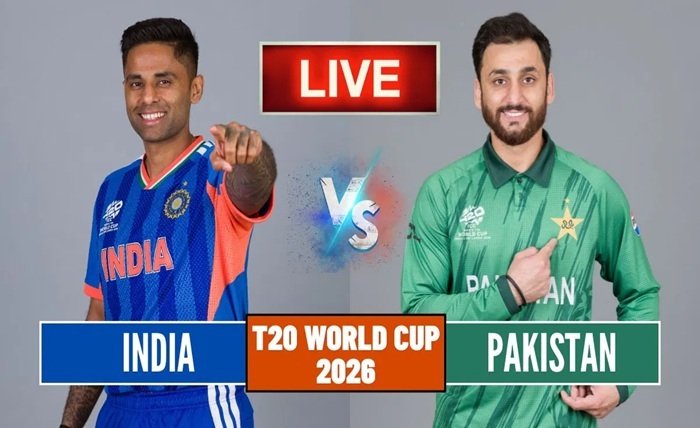
If there’s a match that many cricket fans have been really excited about this season of the T20 Men’s ICC World Cup, it has to be Pakistan vs. India. Yes, it’s because they’ve always been one of the biggest rivalries in cricket, but it’s also because of the tension between these two nations outside the cricket field.
So, the match finally happened. On February 15, the two rivals met at the R. Premadasa Stadium in Colombo. The game was definitely full of tension, and many would agree that this match was quite memorable.
The Decision at the Toss
The match started with a bit of a surprise. Pakistan’s captain, Salman Ali Agha, won the toss and decided to bowl first. In many T20 games, chasing is seen as a good idea, but in Colombo, the pitch usually gets slower as the night goes on. This makes it much harder for the team batting second to score quickly.
Suryakumar Yadav, the Indian captain, said he actually wanted to bat first. He knew that setting a target on this specific ground is often better, and by choosing to bowl, Pakistan might have accidentally given India exactly what they wanted.
The Missing Handshake
One thing everyone noticed was that the two captains did not shake hands at the toss. Now, this didn’t really just happen in that match alone. It’s actually part of a no-handshake protocol that has been happening since the 2025 Asia Cup due to political issues between the two countries.
Even after the match ended, the players kept their distance. While the fans in the stands were friendly with each other, the players on the field stayed strictly professional. This somehow made the atmosphere feel a bit more intense than a normal cricket match.
A New Era of T20 Strategy
Beyond the political tension, the way the game is being played has changed a lot. We are seeing more focus on specific player match-ups and data, and teams are no longer just playing by instinct. They are looking at how a certain bowler performs against a specific batter in the powerplay.
Fans who follow these deep stats often visit prediction and betting platforms to see how the odds shift based on these mid-match tactical changes.
In this match, India’s use of Jasprit Bumrah early on was a perfect example of using a strike bowler to kill the game before Pakistan could even get a partnership going. It shows that modern cricket is as much about the plan as it is about the skill.
Ishan Kishan Takes Charge
Now, India didn’t really have a great start. Abhishek Sharma got out for a duck in the very first over. However, Ishan Kishan didn’t let that slow him down. He played a brilliant innings, scoring 77 runs from only 40 balls. He also hit 10 fours and three sixes, which put the Pakistan bowlers under a lot of pressure.
Because of Kishan’s fast start, India was able to reach a total of 175 runs for the loss of 7 wickets in their 20 overs.
Suryakumar Yadav also helped out with a steady 32. On a pitch that was starting to grip and turn, 175 was a very high score. Pakistan’s bowlers, especially Saim Ayub, who took 3 wickets, tried their best to slow India down. Still, the damage was already done.
Pakistan’s Batting Struggle
When it was Pakistan’s turn to bat, they needed to start fast. Instead, they lost wickets almost immediately. Hardik Pandya bowled a wicket-maiden in his first over, and Jasprit Bumrah took two wickets in the next over. Pakistan was suddenly 13/3, and the game felt over before it really began.
Usman Khan was the only one who really fought back, as he was able to score 44 runs. However, he didn’t have anyone to help him at the other end. India’s spinners, Axar Patel and Varun Chakravarthy, were very hard to play on the drying pitch. Pakistan was eventually all out for 114 in the 18th over.
Conclusion: What’s Next?
This 61-run win means India is the first team to qualify for the Super 8 stage. They have won all three of their group matches so far and look like the team to beat in this World Cup.
For Pakistan, things are looking quite difficult. On the table, they’re now third in Group A, and their net run rate has dropped a bit. They must win their next match against Namibia on Wednesday to stay in the tournament. If they lose, they could be heading home early.
We can definitely say that this match showed that while talent is important, reading the conditions and the pitch is just as vital. India got it right, and it paid off with a huge win.